
Reviewed · KOTOR OLD TOWN WALKING TOURS
Self Guided Stroll Through Old Town of Kotor
Kotor’s old town is small enough to cross on foot, yet its twisting lanes can make a simple walk feel like a puzzle. This self-guided audio tour gives you a clear set of historic stops, from the Sea Gate and Piazza of the Arms to St. Tryphon’s Cathedral and the Gurdic Gate. You listen at your own pace, with no group and no fixed departure time.
I like the low price and the freedom to pause whenever you want. I also like the mix of practical orientation and local color, including Kotor’s cat culture, Venetian influence, noble palaces, and the city’s long struggle with natural disasters. The main drawback is navigation: the in-app map and images may not always match Kotor’s winding streets, so you should expect to do some finding on your own.
In This Review
- Key points to know before you go
- Starting at Kotor’s Sea Gate
- Piazza of the Arms and Kotor’s Venetian character
- Why Kotor is known as a city of cats
- Church of St. Luke and the old town’s religious mix
- Karampana Well and the stories behind daily life
- Palaces, noble families, and the old town’s polished façades
- Boka Navy Square, Flour Square, and St. Tryphon’s Cathedral
- Finishing at Gurdic Gate
- The optional climb toward St. John Fortress
- What $6.98 buys you
- Who will get the most from this walk
- Practical tips for a smoother Kotor walk
- Should you book this Kotor audio walk?
- FAQ
- Where does the self-guided Kotor walk start?
- Where does the main walking route end?
- How long does the old-town walk take?
- Is the St. John Fortress climb included?
- Do I need an internet connection during the walk?
- Are headphones provided?
- Is a human guide present?
- What is the cancellation policy?
Key points to know before you go
- Sea Gate starting point: Begin at Kotor’s waterfront entrance and learn what the symbols above the gate mean.
- Compact old-town route: The main walk takes about 1 to 2 hours and ends near the Gurdic Gate.
- Cat-themed stop: The tour explains why Kotor is known as a city of cats and includes a museum-related stop.
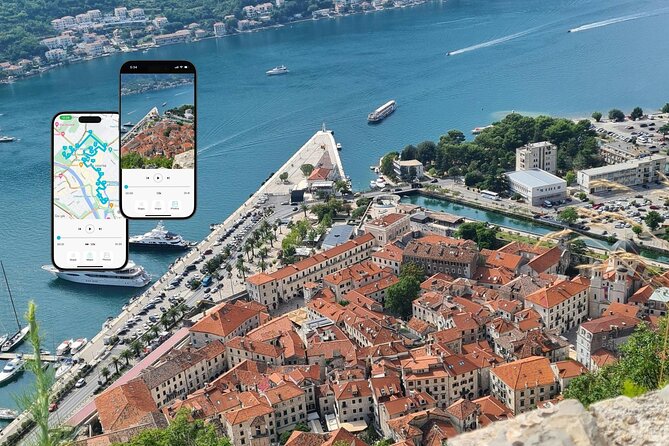
- Offline audio and map: Download the content before walking, then use the written guide, images, and map without mobile data.
- Optional fortress climb: The one-hour trek toward St. John Fortress is separate from the basic walk and requires water and good fitness.
- Very affordable format: At $6.98 per person, this works best as a flexible orientation walk, not a substitute for a private local guide.
Starting at Kotor’s Sea Gate
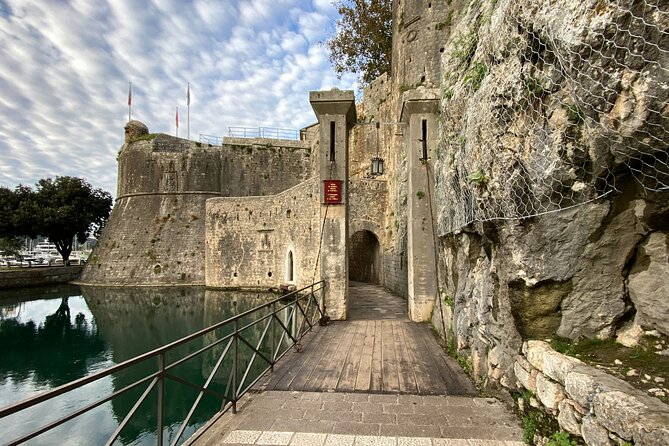
The Sea Gate is the right place to begin. It is one of the most recognizable entrances into Kotor’s walled old town, and the first stop asks you to look up and study its symbols before moving inside.
That opening matters because Kotor can seem like a collection of handsome stone buildings at first glance. The audio commentary gives you a reason to notice details above eye level, including the emblems and signs tied to the city’s past. You get a short introduction rather than a long lecture, with about five minutes planned for the stop.
Use the waterfront as your reference point before starting. Enter through the Sea Gate, open the map, and make sure the first stop has loaded. Since the streets are narrow and bend sharply, it is wise to download the tour before you arrive. The offline option is especially useful if your phone signal is weak or you do not want to use roaming data.
There is no physical meeting with a guide. You receive access instructions by email from Tourific, then use your own phone and headphones. You can listen privately, pause the narration, and repeat sections during the one-year access period.
More kotor old town walking tours in Kotor:
- Kotor Fast-Track: Perast Old Town & Our Lady of the Rocks
★ 5.0 · 411 reviews - Kotor Old Town Walking Tour
★ 5.0 · 357 reviews - Kotor: Old Town Walking Tour
★ 4.8 · 167 reviews
Piazza of the Arms and Kotor’s Venetian character
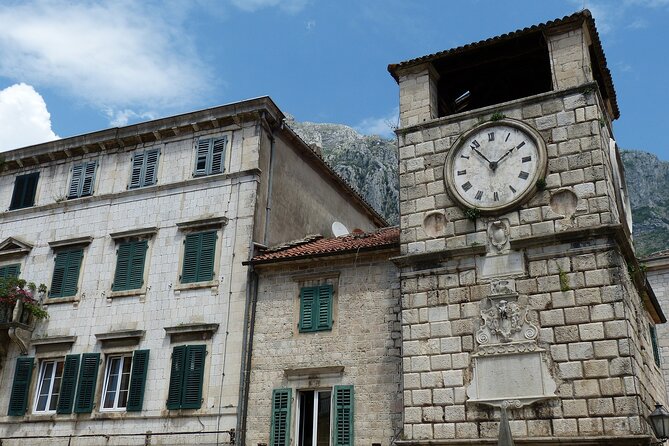
From the Sea Gate, the walk continues to Piazza of the Arms, one of the old town’s main squares. Allow about ten minutes here. The stop covers the square’s name and the story of its leaning tower, giving you a quick way to connect the open public space with Kotor’s military and civic past.
This is one of the better early stops because it helps you understand how Kotor functioned. The old town was not built only for pretty photographs. Its squares, gates, walls, and towers were part of a defended settlement shaped by outside powers, including Venice.
The Venetian influence appears in the architecture and urban layout throughout the route. You will not get a full architectural course in one short walk, but the commentary points out enough to help you see repeated details as you continue. That is useful in Kotor, where several streets and palaces can look similar if you are moving quickly.
The map is less dependable here than the narration. Kotor’s lanes are not laid out like a modern grid, and the digital path may show an image or destination that does not perfectly match what you see. Treat the map as a broad aid, not a turn-by-turn navigation system. If you lose the route, return to a recognizable square or major church and restart from there.
Why Kotor is known as a city of cats

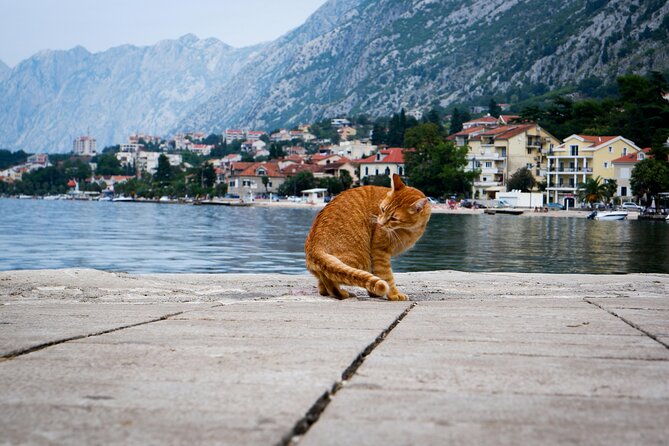
A cat-related stop adds welcome personality to the walk. Kotor is widely associated with cats, and the tour explains why the animals have become part of the city’s identity. It also points you toward a museum dedicated to cats.
This section keeps the experience from becoming a list of dates and building names. You get a glimpse of everyday Kotor, not just its walls and monuments. Cats appear throughout the old town, and the subject gives you a simple theme to notice while walking.
The supplied information does not give a precise time for this stop, so plan to spend a few extra minutes if you want to look around. The same applies to the cat museum itself. The audio walk identifies the attraction, but admission details are not included in the $6.98 price.
Church of St. Luke and the old town’s religious mix
The Church of St. Luke receives about ten minutes on the route. The commentary explains why this modest-looking church is significant, making it more than another attractive stone building squeezed between larger landmarks.
Kotor’s old town contains several churches close together, and it can be hard to remember which one is which. A short explanation at St. Luke helps you slow down and give the building its own place in the story. This is a good example of where an audio walk earns its small fee: you get context exactly when you are standing in front of the site.
You should not expect a guide to open the church or provide a live explanation of its interior. The experience includes audio and written material, along with images intended to help identify stops. Opening times for individual monuments are not provided, so the tour is safest as an exterior walking experience unless you confirm access separately.
The commentary also fits Kotor’s wider story of cultural change. Religious buildings, Venetian design, noble residences, and defensive structures all sit within a very compact area. You can cover a lot without transport, but you need to keep your pace sensible if you want time for photographs.
Same bay, a completely different day out:
- Kotor: Swim in the Blue Cave + Lady of the Rocks Tour
★ 4.7 · 3,462 reviews - Kotor: Blue Cave, Submarine Base and Lady of the Rocks Tour
★ 4.9 · 2,869 reviews - Kotor: Blue Cave Swim Stop, Lady of the Rocks & Submarine Base
★ 5.0 · 1,914 reviews - From Dubrovnik: Montenegro Day Trip with Boat Cruise
★ 4.6 · 1,331 reviews
Karampana Well and the stories behind daily life
Karampana Well is a short five-minute stop. The tour explains the origin of the fountain, drawing attention to a feature you could easily pass without noticing.
Small details like this are valuable on a self-guided walk. Kotor’s major churches and squares are obvious, but wells tell you something about ordinary life inside the walls. A fountain was not merely decoration. It was part of how people lived and gathered in the old town.
This stop also gives the route a useful rhythm. You move from a grand entrance to a public square, then to a church and a well. The walk does not rely only on major monuments. It shows you how the city’s parts fit together.
Because the old town is pedestrian-friendly but confusing, keep the app open only when needed and use visual landmarks as well. The map has been criticized for inaccurate guidance, and the winding streets can make the next destination hard to find. The written directions and stop images may help, but they do not remove the need to pay attention.
Palaces, noble families, and the old town’s polished façades

As you continue, the audio introduces the houses of Kotor’s noble families, which are referred to as palaces. This is one of the more useful themes in the walk because it encourages you to read the façades around you rather than treat every large building as a generic mansion.
The word palace can sound grand, but in Kotor it refers to the impressive homes of powerful families inside the old town. Their placement and appearance point to the wealth and status that once shaped local life. The walk gives you a way to notice these buildings while moving between the larger squares and churches.
I like this kind of commentary because it connects architecture to people. You are not simply told that a building is old. You learn that it belonged to a social class with influence in the town.
The guide is described as AI-generated, so the tone may feel less personal than a live local guide. That is the trade-off for the low cost and repeat access. You get consistent information and can listen again, but you cannot ask a question or request more detail about a particular family or building.
Boka Navy Square, Flour Square, and St. Tryphon’s Cathedral
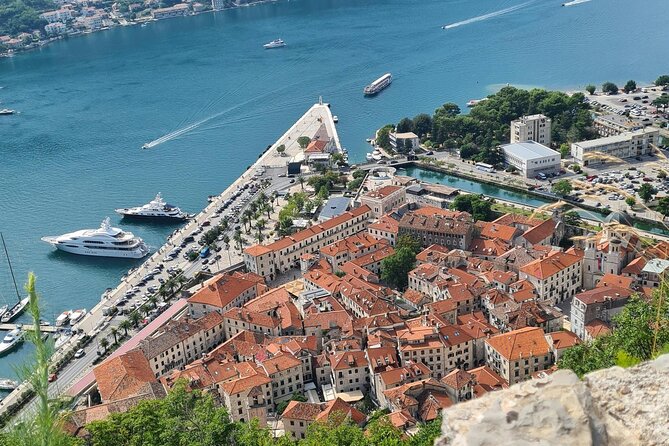
The main route then passes through several significant parts of the old town, including Boka Navy Square, Flour Square, and St. Tryphon’s Cathedral. This section takes about 20 minutes and leads you toward the Gurdic Gate.
The changing square names help you understand that Kotor was not built around one single central monument. Different spaces had different roles, and each one adds another piece to the town’s identity. Flour Square, in particular, points to the practical side of city life, while the cathedral brings you back to Kotor’s religious and architectural importance.
St. Tryphon’s Cathedral is one of the major landmarks on the walk. The route includes it as part of the passage through the old town, rather than promising a separate interior tour or admission. If you want to go inside, check conditions locally because entrance information is not included.
This section is where the self-guided format gives you the most control. You can pause at the cathedral, spend longer in a square, or replay a passage if the street noise makes it hard to hear. You are not holding up a group, and you do not need to keep pace with anyone else.
At the same time, you must manage your own route. The town’s lanes may not appear on the map exactly as they do on the ground. Allow extra time beyond the stated 20 minutes if you want to take photographs or sort out a wrong turn.
Finishing at Gurdic Gate
The old-town portion ends at Gurdic Gate. The route description places the final exit there, while the digital meeting information also displays a Fortress View address. In practical terms, treat Gurdic Gate as the end of the main city walk, then decide if you want to continue uphill.
This finish works well because it brings you out of the densest part of the old town. You can stop the tour here, find a nearby place to rest, or continue toward the fortress if your energy and timing allow.
The stated walking time for the main route is about 1 to 2 hours. That includes time spent at the stops and the time needed to walk between them. Your total time will be longer if you stop for food, enter a church, visit the cat museum, or take many photographs.
The opening hours shown for the experience are 8 a.m. to 6 p.m., Monday through Sunday, for the listed operating period from May 21, 2024, to October 6, 2026. These hours describe the tour’s stated availability, not necessarily the opening hours of every church, museum, or fortress.
The optional climb toward St. John Fortress
The fortress section is not part of the $6.98 admission. It is an optional trek of about one hour, added after the old-town route.
The climb can reward you with broad views over Kotor, but you should not treat it as a casual extension of the street walk. The route involves hiking trails and an ascent. Bring enough water and be ready for a more demanding hour on foot. Good fitness is required, particularly in warm weather.
There is some confusion in the supplied end information, which refers to a monastery in one place and St. John Fortress in another. The clear practical point is that the uphill extension is optional, separate from the old-town tour, and not included in the admission price. Confirm the exact route in the app before setting off.
If you are short on time, tired from a cruise stop, or mainly interested in Kotor’s architecture, skip the climb. The old town itself contains the main value of this experience. If you want elevated views and have water, suitable footwear, and enough time, the fortress extension gives the walk a stronger finish.
What $6.98 buys you
At $6.98 per person, this is inexpensive for a private activity. Only your group participates, and you receive one year of access on iOS and Android. You can listen more than once, reuse the walk on another day, or share the experience within the limits of the booking and app access.
The price also covers an audio guide, written guide, stop images, an interactive map, and offline use after downloading. That is a good bundle for someone who wants a basic introduction without paying for a private human guide.
The value depends on what you expect. If you want a cheap way to learn why a square, church, well, or palace matters, the price is easy to justify. If you need precise navigation, live answers, or detailed guidance up the fortress trail, the value is less certain.
A full satisfaction guarantee is provided, with a full refund available if you do not like the tour. Cancellation is free up to 24 hours before the start time. Inside that 24-hour window, the payment is not refunded and changes are not accepted.
Who will get the most from this walk
I would choose this tour if you are new to Kotor and want an organized first look at the old town. It suits independent walkers who prefer to stop when they want, use their own headphones, and avoid joining a scheduled group.
It also works well for people on a tight budget. The route covers the major old-town themes without transport, a meeting with a guide, or a fixed group departure. Service animals are allowed, and the activity is near public transport.
You should think twice if accurate digital navigation is your top concern. Kotor’s winding lanes can be difficult to follow, and the map and images may occasionally be off. You can still use the narration, but you may need to retrace your steps or ask locally for directions.
The fortress add-on suits people who enjoy a short but demanding climb. It is not the best choice if you have limited mobility, little water, or only a small amount of time. Most people can participate in the main town walk, but the uphill section needs more care.
Practical tips for a smoother Kotor walk
Download the tour before arriving. Offline access removes one major source of trouble and lets you focus on the streets instead of your data connection.
Start with a charged phone and your own headphones. No device or headphones are supplied. Keep the written guide available when the audio image and the building in front of you do not line up.
Use the Sea Gate, major squares, churches, and city gates as physical reference points. Do not follow the blue line blindly. In a town with winding lanes, a real landmark may be more useful than a phone map.
Carry some cash. The route itself is inexpensive, but cash may be useful around town, and card acceptance is not guaranteed everywhere. Prices in the old town can also feel high, so plan your spending before stopping for food or drinks.
Wear comfortable shoes for cobbled streets. If you add St. John Fortress, bring water and allow at least an extra hour, with more time if you stop for views.
Should you book this Kotor audio walk?
Book it if you want an affordable, flexible introduction to Kotor’s old town, especially if you are happy to handle some navigation yourself. The strongest parts are the clear sequence of landmarks, the cat story, the Venetian and noble-family context, and the ability to listen offline at your own pace.
Skip it if you want a human guide, exact door-to-door directions, or a fully explained fortress hike. At this price, the tour is best seen as a helpful audio companion for exploring the city, not as a polished substitute for private guiding.
FAQ
Where does the self-guided Kotor walk start?
It starts at the Sea Gate in Kotor, Montenegro.
Where does the main walking route end?
The main old-town route ends at the Gurdic Gate.
How long does the old-town walk take?
The stated duration is about 1 to 2 hours, including walking between stops and time spent at them.
Is the St. John Fortress climb included?
No. The fortress trek is optional, takes about one hour, and does not include admission.
Do I need an internet connection during the walk?
Not after you download the tour. The audio, written guide, images, and map are available offline.
Are headphones provided?
No. You need to bring your own phone and headphones.
Is a human guide present?
No. This is a self-guided activity using audio and written content in the mobile app.
What is the cancellation policy?
You can cancel for a full refund up to 24 hours before the experience starts. Cancellations or changes made within 24 hours are not accepted for a refund.
Just added around Kotor
- Wild Beauty of Montenegro – Private Tour★ 5.0 · 3 reviews
- The Old Captain’s Smile Tour in Kotor★ 5.0 · 7 reviews
- Express Cable Car ascent & 25Turns Epic Bike Descent.★ 4.5 · 9 reviews
- Sveti Stefan, Budva and Kotor★ 4.5 · 6 reviews
- Tara rafting (Private tour)★ 5.0 · 4 reviews
- National park Skadar Lake (Private tour)★ 4.5 · 6 reviews
- Special Montenegro: Lipa cave – Njegoš’s Mausoleum – Njeguši village – Cetinje★ 5.0 · 3 reviews
- Blue Cave and Lady of the Rocks 3 Hours Private Tour★ 5.0 · 6 reviews
Kotor Old Town Walking Tours, compared.

Kotor Fast-Track: Perast Old Town & Our Lady of the Rocks
Read our review →




Kotor private cooking class with lunch and Old town guided tour
Read our review →
Lady of the Rocks & Perast Old Town Private Tour (up to 5 people)
Read our review →Browse the lists this tour appears in