
Reviewed · WALKING TOURS
Podgorica City Walking Tour
Podgorica’s most interesting feature is how quickly the city changes under your feet. In about 90 minutes, you move from a modern central square to Ottoman-era lanes, old bridges, river confluences, socialist apartment blocks, and monuments linked to Montenegro, Russia, and Yugoslavia. I like the compact route and the chance to see places such as Sastavci and Stara Varos that are easy to miss on your own.
I also like that the guide does more than point out statues. Petar, Ana, and Diana have each brought different stories and viewpoints to the walk, with Petar even taking one guest to a church after the official tour. The main drawback is the weather: summer heat can make the open route tiring, while cobblestones in the old quarter call for sensible shoes.
In This Review
- Key points at a glance
- Why Podgorica makes sense on foot
- Starting at Independence Square
- From the National Theatre to Njegos
- Crossing the Moraca River
- Blazo Jovanovic Bridge and Sastavci
- Stara Varos and the Starodoganjska Mosque
- The Clock Tower and the city’s changing edges
- King Nikola in King’s Park
- Pushkin, Goncharova, and the walk back
- What the guides add
- Weather, walking effort, and timing
- Who gets the most from this tour
- Booking value and cancellation terms
- Should you book the Podgorica City Walking Tour?
- FAQ
- Where does the Podgorica City Walking Tour start?
- What time does the tour begin?
- How long does the walking tour last?
- Is the tour offered in English?
- Is transportation included?
- Is the tour suitable for most people?
- What happens if the tour is canceled?
Key points at a glance
- A clear 90-minute introduction: The walk covers Podgorica’s central sights without taking up half your day.
- Two sides of the city: You see modern Podgorica and the older Ottoman quarter of Stara Varos.
- Strong photo stops: The route includes the Millennium Bridge, Moraca River, Clock Tower, and several unusual monuments.
- Guides add personal context: Petar, Ana, and Diana have been praised for making the history easy to follow and interactive.
- Good first-day choice: You finish at Independence Square with suggestions for what to do next.
- Simple walking logistics: There is no transport or hotel pickup, and the tour begins at 9:00 a.m.
Why Podgorica makes sense on foot
Podgorica is not a city where every attraction is packed into a polished old center. Its story is scattered across several districts and separated by the Moraca and Ribnica rivers. A guided walk helps you connect those pieces.
The route also gives you a quick lesson in Montenegro’s changing rulers and identities. You encounter Ottoman remains, Montenegrin leaders, Russian cultural figures, postwar monuments, and newer city landmarks. That mix is more useful than a walk devoted only to grand buildings.
At $30.10 per person, this is not the cheapest way to spend 90 minutes, but the price is reasonable if you want an English-speaking guide and an organized introduction. Every stop is free, and you are paying mainly for interpretation, local orientation, and the chance to ask questions.
The maximum group size is 20 people. That is small enough for a guide to keep the walk moving and answer questions, though the experience may feel less personal when the group fills. The minimum is three people, so an off-season booking can be canceled if too few people sign up.
A few more Podgorica trips to weigh up
- Podgorica: Walking tour, all the secrets of Podgorica
★ 5.0 · 9 reviews - Private Podgorica City Walking Tour
★ 5.0 · 9 reviews - Kotor Old Town Walking Tour
★ 5.0 · 357 reviews
Starting at Independence Square
Meet your guide at the fountain on Independence Square, also known as Trg Republike, in central Podgorica. The start time is 9:00 a.m., which is a useful choice in a city that can become very hot later in the day.
In rain, look for the guide near Societe Generale Bank, under the eaves around the square. That detail matters because the fountain and surrounding area may be busy enough that a vague meeting point could cause confusion.
The first part of the walk passes the Municipality building and pauses at the statue of Marko Miljanov. Miljanov was a famous general and writer from the late 19th century. This is a short introduction rather than a long museum-style talk, but it gives you a first sense of how military and literary figures appear together in Montenegro’s public spaces.
I like beginning here because it gives you a practical center point. You can return to the square after the tour, and the guide can help you place the rest of Podgorica around it.
From the National Theatre to Njegos
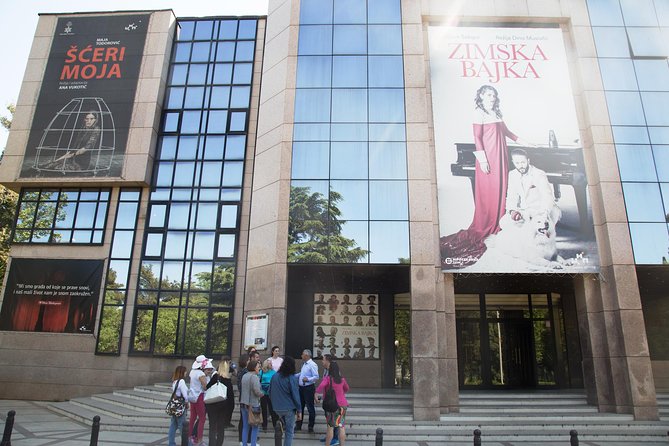
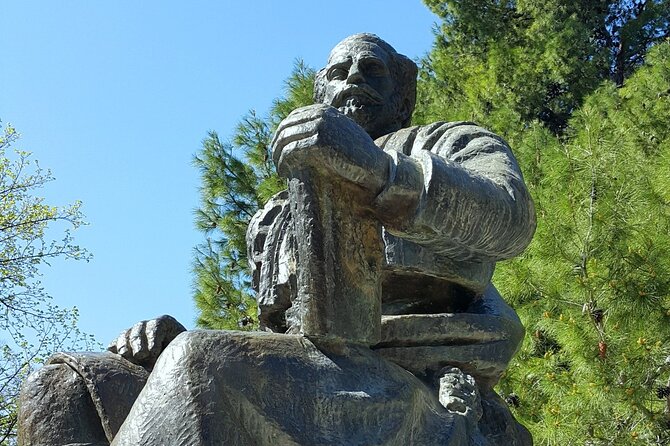
From Bokeska Street, the group passes the Montenegrin National Theatre and continues toward the statue of Petar II Petrovic Njegos. Njegos was a prince-bishop, writer, and philosopher, so this stop adds political and cultural weight to the route.
The value here is the explanation. A statue alone tells you very little. A guide can show how Montenegro remembers leaders who were not simply rulers, but also writers and religious figures.
The walk remains easy at this stage. There is no admission fee, and the stop is brief enough that you are not committing to a long formal tour of the theatre. If you want to explore the theatre in more detail, you will need to arrange that separately, since the walking tour focuses on the exterior sights.
Crossing the Moraca River
The Moraca is one of Podgorica’s defining features, and the tour crosses it more than once. The river section breaks up the monument viewing and gives you a better sense of how the city is laid out.
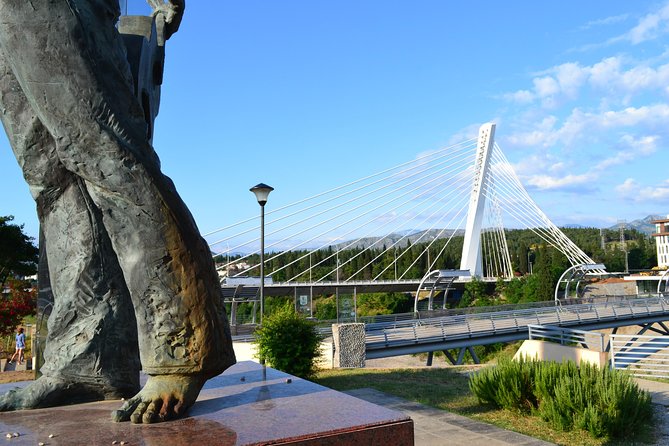
One crossing leads to a view of the Millennium Bridge. The bridge is one of Podgorica’s best-known modern landmarks, and the pedestrian viewpoint provides a useful photo stop. Five minutes is enough for pictures and a quick explanation, though it is not a long pause for sitting or taking in the river at leisure.
The route then stops at the Vladimir Vysotsky monument. Vysotsky was a Russian poet, singer, and songwriter who died young and lived in Podgorica for a period. This is one of the more unexpected stops, especially if you associate the city only with Montenegrin politics and Ottoman remains.
That statue gives the guide room to show Podgorica’s international connections. It is also a good reminder that the city’s public art is not limited to local figures.
Same bay, a completely different day out:
- Skadar Lake National Park Guided Boat Tour with Wooden Boat
★ 5.0 · 91 reviews - Best from our coast (Kotor bay, Budva, Sv Stefan, Skadar lake)
★ 5.0 · 79 reviews - GREAT MONTENEGRO TOUR Cetinje – Njeguši – Kotor – Budva – Bečići – Saint Stefan
★ 5.0 · 69 reviews - Skadar Lake National Park: Guided Boat Tour to Kom Monastery
★ 4.5 · 49 reviews
Blazo Jovanovic Bridge and Sastavci
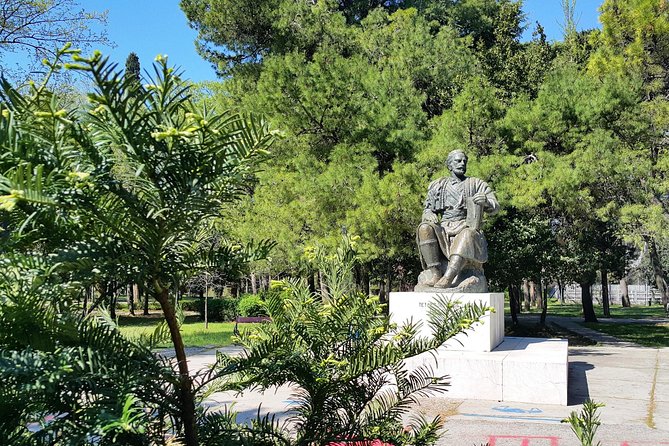
The group crosses the Moraca again at Blazo Jovanovic Bridge and continues toward Sastavci, also called Skaline. This is where the walk becomes less formal and more atmospheric.
Sastavci marks the meeting point of the Ribnica and Moraca rivers. The setting is picturesque, but it is not carefully maintained. You should expect an attractive site with a somewhat neglected feel, not a manicured park or a fully restored historic complex.
Above the confluence are barely visible remains of the Ribnica fortress, known as Nemanjin grad. The site is linked with Stefan Nemanja, who later founded the Nemanjic dynasty. Because the ruins are faint, the guide’s explanation is especially useful. Without context, you could easily walk past without realizing what you are seeing.
You then cross an old stone bridge toward Stara Varos, Podgorica’s oldest preserved quarter. The bridge and river junction are among the more memorable parts of the route because they show the older physical shape of the city. Take care on the cobblestones, especially if you are wearing smooth-soled shoes.
Stara Varos and the Starodoganjska Mosque
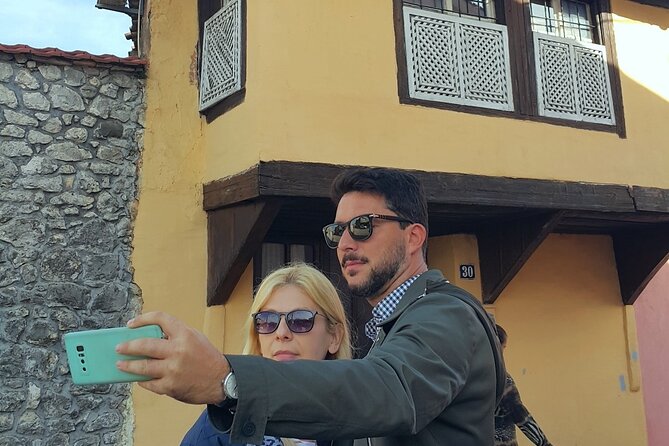
Stara Varos dates from the Ottoman period and feels different from the central streets around Independence Square. The contrast is one of the main reasons to book the walk. You are not simply seeing a line of monuments. You are moving between distinct chapters of Podgorica.
The tour makes a short stop at the Starodoganjska Mosque, built in the 15th century. For many years, nearby traders maintained it. The stop is brief and does not include a stated interior visit, so you should think of it as an exterior landmark and a chance to hear about the old commercial quarter.
This part of the route is particularly useful if you have limited time in Podgorica. Stara Varos is easy to overlook when you are focused on the modern center, yet it provides some of the clearest evidence of the city’s Ottoman past.
The old quarter also brings the practical issue of heat into sharper focus. There may be less shade than you would like, and the uneven paving makes comfortable footwear important.
The Clock Tower and the city’s changing edges
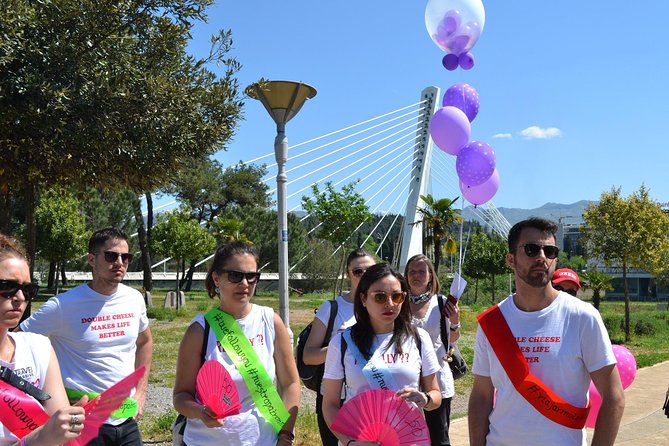
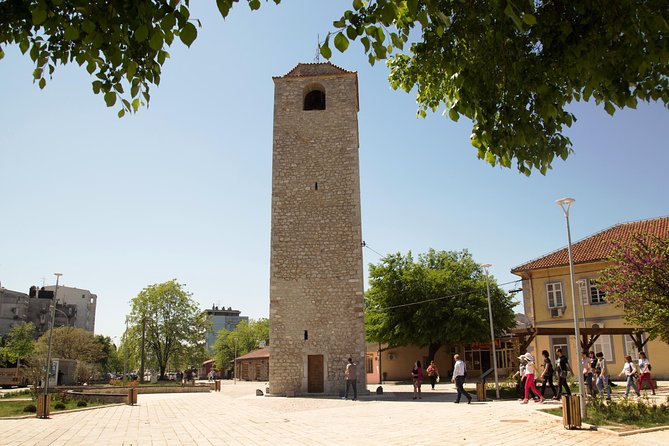
The Sahat Kula, or Clock Tower, is one of Podgorica’s key landmarks. It was built in the 18th century by Adzi Pasha Osmanagic and sits at the edge of Stara Varos.
Its position tells part of the story. Across the street are socialist apartment blocks, so the tower faces a very different style of city from the one around it. That visual contrast is more revealing than a perfectly restored historic district would be. Podgorica has been rebuilt, altered, and expanded, and the Clock Tower remains in the middle of those changes.
The stop lasts around ten minutes, giving the guide time to explain the tower and its setting. You will also have a good chance to take photographs, though the tour is not designed as a dedicated photography outing.
King Nikola in King’s Park
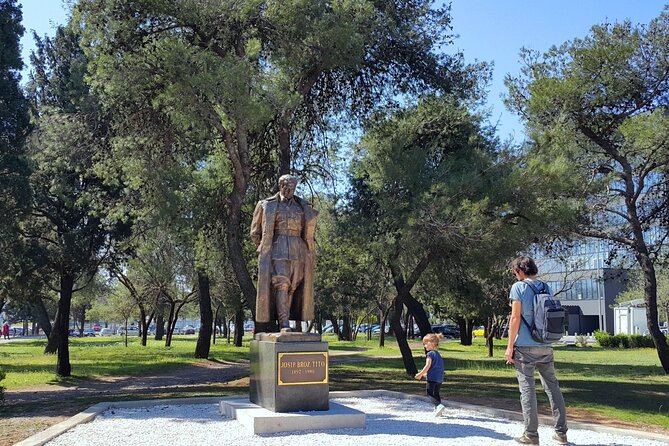
On the return route, the walk passes the monument to King Nikola in King’s Park. It is a conventional heroic equestrian statue, erected in 2006 on Podgorica’s Liberation Day from World War II.
The monument sits on a plateau opposite the national Parliament. That location links Montenegro’s royal past with its modern political life. The statue itself may not be the most unusual sight of the morning, but it helps complete the city’s timeline.
This is also a good point to ask the guide about Podgorica’s more recent past. The route includes older buildings and monuments, but it does not present the city as a preserved medieval capital. Much of its character comes from the meeting of royal memory, socialist planning, and modern civic construction.
Pushkin, Goncharova, and the walk back
The final photo stop is the monument to Alexander Pushkin and Natalija Goncharova on the corner of Njegoseva Street. It shows Pushkin reading poetry to his wife.
Like the Vysotsky monument, this stop highlights Podgorica’s cultural ties beyond Montenegro. It also adds a lighter note near the end of the walk. After the photo stop, you return to Independence Square, where the activity ends.
Finishing where you began is convenient. You can continue sightseeing, find a café, or ask the guide for suggestions about what to do next. The tour specifically includes recommendations for further activities, and that can be as useful as the formal route if you have only a day or two in the city.
What the guides add
The strongest part of this experience is the guide’s role. The route itself is easy to follow on a map, but the meaning of the sites is not always obvious.
Petar has been described as going beyond the planned walk, answering questions in detail and taking one guest to a special church afterward. That does not mean an extra stop is guaranteed, but it suggests that a good conversation can shape the experience.
Ana’s style is interactive and conversational. If you prefer to ask questions as you walk rather than listen to a long speech, her approach should suit you. Diana has led the route in difficult weather and speaks Russian well, in addition to guiding the tour.
The tour is offered in English. The individual guide may have other language skills, but you should book this as an English-language experience unless the provider confirms another arrangement.
Weather, walking effort, and timing
This is an easy city walk, but easy does not mean effortless in Podgorica’s summer heat. The tour begins at 9:00 a.m., which helps, but you should still bring water, wear a hat, and choose light clothing.
The route operates in almost all weather conditions, with appropriate clothing advised. At the same time, poor weather can lead to cancellation, with a different date or full refund offered. Rain, wind, and cold have not necessarily stopped the walk, but the experience is more pleasant when conditions are comfortable.
You will cover streets, bridges, and a small section of cobblestones. Comfortable footwear is the main packing tip. Transportation is not included because the route is designed to be walked, and there is no hotel pickup or drop-off.
The meeting point is near public transportation, and service animals are allowed. Most people can take part, but anyone who has trouble with heat, uneven paving, or a 90-minute walk should consider those conditions before booking.
Who gets the most from this tour
I would choose this walk for a first morning in Podgorica. It gives you a map in your head, introduces the main areas, and leaves the rest of the day free.
It also suits you if you like context more than a checklist. The route includes eleven stops, but several are quick pauses. The real benefit is the connection between them: rivers, old neighborhoods, Ottoman traces, royal symbols, socialist blocks, and modern bridges.
You may find it less satisfying if you want to enter museums, spend a long time inside religious buildings, or explore each monument at your own pace. No attraction admission is included, and the tour is primarily an outdoor orientation walk.
It is a good match for solo visitors and couples who want to ask questions. With a maximum of 20 people, it remains manageable, though a full group will not feel like a private tour.
Booking value and cancellation terms
At $30.10, the price is fair if you value a local guide and want to avoid piecing together Podgorica’s scattered sights yourself. Since the tour includes only guiding services, you are not paying for transport, food, drinks, or entry tickets.
The free admission at every stop keeps your additional costs low. You will only need to budget for anything you choose to eat or visit afterward, plus a gratuity if you wish to thank the guide.
You can cancel for a full refund up to 24 hours before the 9:00 a.m. start time. Changes or cancellations inside that window are not accepted for a refund. The minimum group requirement is worth noting, especially outside the busiest season, because a confirmed booking can still be canceled if at least three people are not signed up.
Should you book the Podgorica City Walking Tour?
Book it if you want a short, useful introduction to a city whose story is spread across several neighborhoods. The best parts are the shift into Stara Varos, the meeting of the rivers at Sastavci, and the guide’s explanations of figures such as Njegos, Marko Miljanov, Vysotsky, and Pushkin.
I would especially recommend it for a first visit, a short stay, or a morning before independent sightseeing. Start early, wear good shoes, carry water, and arrive ready to ask questions.
Skip it if you prefer a self-guided stroll and do not need background on the monuments. But if you want Podgorica to make sense beyond a collection of bridges and statues, $30.10 buys a practical first look with plenty of room for local stories.
FAQ
Where does the Podgorica City Walking Tour start?
The tour starts at the fountain on Independence Square, at 2 Novaka Miloševa in Podgorica. In rainy weather, the guide will wait near Societe Generale Bank under the eaves around the square.
What time does the tour begin?
The tour starts at 9:00 a.m.
How long does the walking tour last?
The tour lasts approximately 1 hour and 30 minutes.
Is the tour offered in English?
Yes. English is the listed tour language.
Is transportation included?
No. Transportation, hotel pickup, and hotel drop-off are not included. The experience is designed as a walking tour.
Is the tour suitable for most people?
Yes. It is described as an easy city walk, and most people can participate. Comfortable shoes are advised because part of the route uses cobblestone streets, and Podgorica can be very hot in summer.
What happens if the tour is canceled?
If poor weather causes cancellation, you will be offered another date or a full refund. If the minimum of three participants is not reached, you may choose a full refund, another date or similar tour, or a private tour with a surcharge.
Just added around Podgorica
- Private Skadar Lake National Park Tour with Wooden Boat and Wine★ 4.5 · 4 reviews
- Durmitor National Park, Northern Fairy Tail -private tour from Podgorica★ 5.0 · 7 reviews
- NORTH TOUR Np Biograd Gora-Lake-Moraca Canyon & Monastery-Kolasin★ 5.0 · 3 reviews
- Private transfer from Airport Podgorica and city to Kotor★ 5.0 · 8 reviews
- Private transfer from Podgorica airport or Podgorica to Tivat★ 5.0 · 5 reviews
- Private half day tour -Podgorica with its surroundinggs★ 5.0 · 7 reviews
- Private Durmitor National Park and Black Lake Tour★ 5.0 · 5 reviews
- Airport Transfer Podgorica to Portonovi / Herceg Novi★ 5.0 · 4 reviews
Walking Tours, compared.
Private Kotor Walking Tour – Rick Steves Recommended
Read our review →Browse the lists this tour appears in