
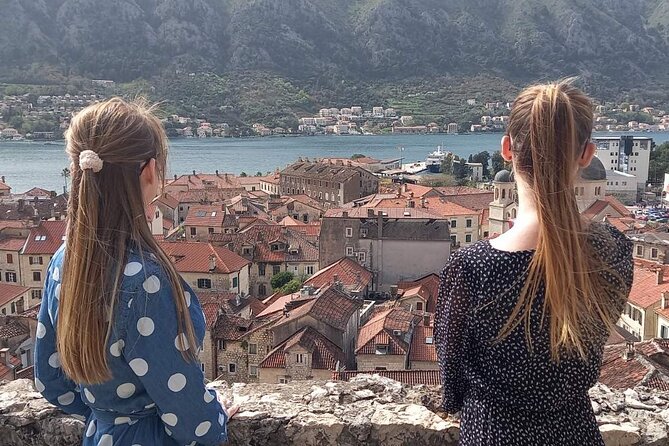
Reviewed · KOTOR OLD TOWN WALKING TOURS
Kotor Old Town Walking Tour
Kotor’s old town makes the most sense when you hear the stories behind its stone streets. This 90-minute walk moves from the Sea Gate through six important squares, past noble palaces and churches, and up part of the northern wall where the Skurda River forms a natural moat.
I like the way the tour uses memorable local stories rather than a string of dates. I also like the practical finish, when Vanja can point you toward places to eat, have coffee, or keep exploring. The main drawback is that the cathedral and Maritime Museum cost extra, so the $26 price does not cover every major interior.
In This Review
- Key points at a glance
- Starting at Kotor’s Sea Gate
- The Square of Arms and Kotor’s working center
- The Square of Flour and two noble palaces
- St. Tryphon’s Square and the city’s protector
- Boka Marine Square and St. Luke’s Square
- The Square of Timber and the River Gate
- The northern wall, Skurda River, and a famous siege
- Cats, folklore, and modern Montenegro
- Why Vanja makes a difference
- What the $26 price really covers
- Who should book this Kotor walking tour
- Practical details before you go
- Should you book it?
- FAQ
- Where does the Kotor Old Town Walking Tour meet?
- How long does the tour last?
- What language is the tour conducted in?
- How much does the tour cost?
- Is admission to St. Tryphon’s Cathedral included?
- Is the Maritime Museum entrance included?
- How many stairs are included in the walk?
- Can I cancel the booking for a refund?
Key points at a glance

- Six historic squares: Each square has its own role, from military center to noble quarter and religious meeting place.
- A strong local guide: Vanja, also listed as Vanya in some tour details, is praised for clear English, patient answers, and stories about both old and modern Montenegro.
- A short wall walk: You climb about 20 stairs to see the northern defenses and the Skurda River below.
- A useful first look at Kotor: The route helps you get your bearings before exploring the town or the Bay of Kotor on your own.
- Evening option: A night walk can be especially atmospheric and leaves the daylight hours free for the bay.
- Good value at $26: The price includes the guide, city entry tax, VAT, and operating support, but not cathedral or museum admission.
Starting at Kotor’s Sea Gate
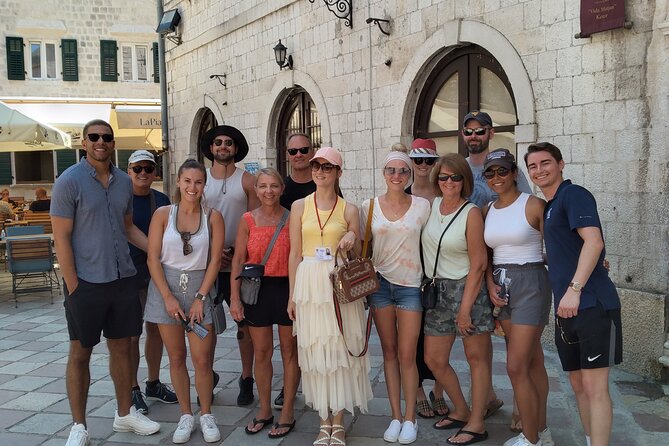
Meet in front of the Sea Gate, beside the tourist information center and the old cannons. Your guide will carry a sign marked KBT, which makes the meeting point fairly easy to spot in the stone maze of Kotor.
The Sea Gate is the right place to begin. It is the main entrance to the old town, and the guide uses it to explain why Kotor grew where it did, inside the Bay of Kotor and behind strong natural and built defenses.
You will get a quick outline of Kotor’s development before moving into the streets. That opening matters because the old town can first seem like a handsome collection of alleys, churches, and squares. A little context helps you see it as a port, a defended settlement, a religious center, and a home for powerful families.
I would arrive a few minutes early. The town’s lanes are easy to confuse, and finding the guide is simpler before the walk begins than after the group has moved into the center.
More kotor old town walking tours in Kotor:
- Kotor Fast-Track: Perast Old Town & Our Lady of the Rocks
★ 5.0 · 411 reviews - Kotor Old Town Walking Tour
★ 5.0 · 357 reviews - Kotor: Old Town Walking Tour
★ 4.8 · 167 reviews
The Square of Arms and Kotor’s working center
The first major stop is the Square of Arms, Kotor’s main public hub. It is a broad, busy-feeling space compared with the narrow lanes around it, and the buildings here show how government, trade, defense, and daily work once met in one place.
Your guide points out the Prince’s Palace, Guard Tower, Old Arsenal, and Clock Tower. You will also hear about local craftsmen and clockmakers, which gives the square a useful human scale. Rather than seeing only grand facades, you begin to picture the people who repaired tools, made goods, kept time, and served the city.
The Clock Tower helps anchor your route. Kotor is compact, but the old town contains enough turns and small squares to make a guided orientation worthwhile. After this stop, you should have a better sense of how the central streets connect.
This is also a good point to ask questions about present-day life. Vanja is known for combining older events with details about Montenegrin customs, habits, and folklore. His style is patient and conversational, so you are not limited to a prepared speech.
The Square of Flour and two noble palaces
The Square of Flour shifts the story from public work to aristocratic power. Here you will see the Pima Palace and Buća Palace, two reminders that Kotor’s old town was shaped by noble households as much as by merchants and sailors.
The guide explains the families linked to these buildings and the lives they led. That detail is useful because palace fronts can blur together after a while. Knowing who lived behind the stone gives each doorway a reason to matter.
Look closely at the contrast between the square’s elegant residences and the tight streets nearby. Kotor’s old town is not a grand palace district laid out in wide boulevards. Its palaces were built into a dense medieval town, close to churches, workshops, lanes, and neighbors.
You should not expect long interior visits here. The focus is on the exterior buildings, their owners, and the social order they represent. If you prefer a tour with extensive indoor access, this walk may feel light on interiors, but it covers more ground and gives you a stronger sense of the town as a whole.
St. Tryphon’s Square and the city’s protector

At St. Tryphon’s Square, the tour slows around the Cathedral of St. Tryphon. This is one of Kotor’s most important landmarks, and the guide explains both the cathedral’s architecture and the life and legend of St. Tryphon, the city’s protector.
The cathedral is included in the route, but its entrance fee is not included in the $26 price. That is worth planning for if you want to see the interior. The walking tour gives you the setting and story first, then you can decide if you want to pay for a closer look.
I like this arrangement for visitors with limited time. You get a meaningful explanation without being required to spend the whole tour inside one building. If you are especially interested in church art or architecture, allow extra time after the walk for the cathedral.
The square also gives you a chance to see how religion shaped Kotor’s public life. The guide does not treat the churches as isolated monuments. Instead, he connects them to the city’s people, legends, and long Christian traditions.
A few more Kotor trips to weigh up
- Private Walking tour with Wine and Food
★ 5.0 · 197 reviews - Kotor Old Town Small-Group Walking Tour
★ 4.5 · 148 reviews - Kotor: Old Town Private Walking Tour
★ 4.9 · 100 reviews - Kotor: Hop-on Hop-off Sightseeing Bus and Walking Tour
★ 4.0 · 84 reviews
Boka Marine Square and St. Luke’s Square
The route continues to the Square of Boka Marine and then St. Luke’s Square. These stops bring Kotor’s maritime identity into focus. The town’s location on the bay was not just scenic. It affected trade, defense, work, and the way people connected with the wider Adriatic world.
At St. Luke’s Square, you will hear about Kotor’s Christian roots and an early layer of architecture that remains present beneath the later buildings. This is the kind of detail that is easy to miss without a guide. A casual walk shows you stone walls and church fronts; the explanation helps you recognize that the town was built and rebuilt over many centuries.
The pace is one of the tour’s strengths. You are not rushed from one photo stop to the next. The route is short enough for the guide to explain the places properly, while still covering a useful portion of the old town.
Vanja’s English is described as excellent, and that matters here. Religious and maritime history can become confusing when names and dates pile up. Clear delivery, room for questions, and a willingness to explain an idea twice make this portion easier to follow.
The Square of Timber and the River Gate
At the Square of Timber, the focus turns to Blessed Ozana, an important figure in Kotor’s past. Her story adds another personal thread to the tour and keeps the route from becoming only a parade of rulers, palaces, and military events.
Nearby, the Skurda River runs beneath the River Gate. This is one of those small details that changes how you read the town. Kotor’s defenses were not built alone. The river helped form a natural moat along the northern side, adding water to the walls and mountains to the city’s protection.
The River Gate also connects the old town to its setting. Inside the walls, the lanes feel enclosed and human-scaled. At the gate, you begin to see the natural forces that helped shape Kotor’s position and its defensive plan.
This stop is useful for anyone who plans to walk independently later. You will recognize the river, gates, and nearby passages, rather than treating the old town as a maze with no map in your head.
The northern wall, Skurda River, and a famous siege

The tour includes a short walk up the northern wall, with about 20 stairs. This is the most physically demanding part of the route, though it is a modest climb compared with longer fortress hikes above Kotor.
From this section, the guide explains how the walls were constructed and why the Skurda River mattered. You gain a better sense of the city’s defensive design because you are looking at the wall from the wall itself, not only from street level.
This is also where the tour reaches its most dramatic historical episode: the siege led by Hayreddin Barbarossa, one of history’s most successful pirates and undefeated admirals. The story gives the defenses a clear purpose. These were not decorative walls. They were built to protect a valuable port and the people living inside it.
If you have limited mobility, balance concerns, or dislike stairs, ask about the wall portion before setting out. The tour information specifies 20 stairs, but it does not provide a separate step-free route. Comfortable shoes are a sensible choice for the stone streets and short climb.
Cats, folklore, and modern Montenegro

The tour is not limited to official monuments. Kotor’s cats also make an appearance in the stories and local character of the town. One guide has been praised for bringing in the city’s feline reputation, along with a gossiping well and other pieces of folklore.
These details may sound small, but they help keep a walking tour from feeling like a lecture. You get the famous cathedral and palaces, but also the odd local tale that helps the town feel lived in.
The guide can also talk about modern life in Montenegro, including culture, habits, and folklore. That balance is important. You are not only learning what happened centuries ago. You are getting clues about how the town is understood today.
One particularly useful example is the guide’s willingness to adjust the route for a participant who was afraid of cats. That suggests a flexible approach rather than a rigid march through fixed stops. Still, the published route is the route you should expect, so mention any concern at the start.
Why Vanja makes a difference
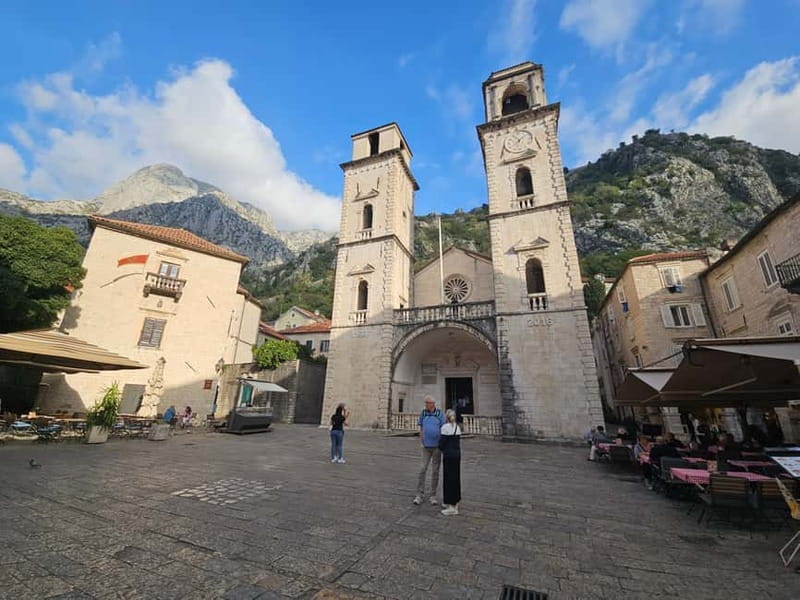
The strongest praise centers on Vanja, whose name also appears as Vanya in the tour information. He is described as welcoming, calm, attentive, and patient, with immaculate English and a talent for making historical facts easy to remember.
That combination is more useful than a guide who simply knows many dates. Kotor has Venetian, maritime, religious, military, and local stories competing for your attention. A guide who can connect them and answer questions without rushing makes the 90 minutes feel well used.
The tour can feel almost private if only a very small number of people book a particular date. One booking became a private tour because the pair were the only participants. That is not guaranteed, so I would treat it as a pleasant possibility rather than a reason to book.
An evening departure can also change the mood. After dark, the stone lanes and squares feel more atmospheric, and you can use daylight for the Bay of Kotor. Daytime is better if you want to study architectural details clearly or take sharper photographs. Check the available start time when booking.
What the $26 price really covers
At $26 per person, this is a reasonable buy if you want structure, context, and a local introduction without committing to a long excursion. The price includes a licensed local guide, city entry tax, VAT, and operational assistance.
The tour does not include admission to St. Tryphon’s Cathedral or the Maritime Museum. That is not a major flaw, but you should add those costs if indoor visits are part of your plan. The guide covers the city from the outside and gives you enough context to decide which interiors deserve your time and money.
The short duration improves the value for several types of visitors. Cruise passengers, people with only an afternoon in Kotor, and visitors using the town as a base can fit this walk around other plans. You finish back at the Square of Arms, so you do not lose time finding your way home.
The final recommendations are another practical benefit. You can ask Vanja about dining, cafes, and activities that match your interests. The tour does not include a meal or a broader trip around the bay, but it helps you make better choices after the walk.
Who should book this Kotor walking tour
I would choose this tour if you want a clear first look at the old town, especially if you care about history, architecture, local stories, or getting oriented quickly. It also suits solo visitors and couples who prefer a guide’s company but do not want a full-day group excursion.
It works well for a first afternoon or evening in Kotor. Take the walk early if you want to use its advice for the rest of your stay. Choose an evening start if you plan to spend daylight exploring the bay and would like to see the old town after nightfall.
Families with older children may find the stories more engaging than a formal museum visit. The cat tales, siege story, noble families, and river defenses give younger listeners several hooks. Keep in mind the stone streets and 20 stairs.
I would look elsewhere if your priority is a long climb to Kotor Fortress, extensive cathedral time, or a full tour of the Maritime Museum. Those are separate interests, and this experience is designed as a compact old-town walk, not a complete city pass.
Practical details before you go
The tour is offered in English with a live guide. It lasts 1.5 hours, and the exact starting time depends on availability when you book.
You can cancel up to 24 hours before the start for a full refund. The reserve-now, pay-later option lets you hold a place without paying at the time of booking, which is useful when your Montenegro plans are still shifting.
Meet at the Sea Gate, next to the tourist information center and near the old cannons. Look for the KBT sign. Bring comfortable footwear, allow for the 20 stairs, and remember that cathedral and Maritime Museum admission are separate.
Should you book it?
Book this Kotor Old Town Walking Tour if you want the town to make sense quickly and you value a guide who can connect grand monuments with folklore, modern life, and practical advice. Vanja’s patient style, strong English, and ability to handle questions are major advantages.
At $26, the tour offers good value for a focused introduction. The only real limits are its short length, the extra fees for two interiors, and the small wall climb. For a first visit, an evening stroll, or a compact history lesson before independent exploring, I would book it.
FAQ
Where does the Kotor Old Town Walking Tour meet?
Meet in front of the Sea Gate, next to the tourist information center and near the old cannons. The guide will hold a sign marked KBT.
How long does the tour last?
The walking tour lasts 1.5 hours.
What language is the tour conducted in?
The tour is conducted in English with a live guide.
How much does the tour cost?
The price is $26 per person.
Is admission to St. Tryphon’s Cathedral included?
No. The cathedral entrance fee is not included in the tour price.
Is the Maritime Museum entrance included?
No. The Maritime Museum entrance fee is not included.
How many stairs are included in the walk?
The tour includes walking up 20 stairs.
Can I cancel the booking for a refund?
Yes. You can cancel up to 24 hours in advance for a full refund.
Just added around Kotor
- Wild Beauty of Montenegro – Private Tour★ 5.0 · 3 reviews
- The Old Captain’s Smile Tour in Kotor★ 5.0 · 7 reviews
- Express Cable Car ascent & 25Turns Epic Bike Descent.★ 4.5 · 9 reviews
- Sveti Stefan, Budva and Kotor★ 4.5 · 6 reviews
- Tara rafting (Private tour)★ 5.0 · 4 reviews
- National park Skadar Lake (Private tour)★ 4.5 · 6 reviews
- Special Montenegro: Lipa cave – Njegoš’s Mausoleum – Njeguši village – Cetinje★ 5.0 · 3 reviews
- Blue Cave and Lady of the Rocks 3 Hours Private Tour★ 5.0 · 6 reviews
Kotor Old Town Walking Tours, compared.

Kotor Fast-Track: Perast Old Town & Our Lady of the Rocks
Read our review →



Kotor private cooking class with lunch and Old town guided tour
Read our review →
Lady of the Rocks & Perast Old Town Private Tour (up to 5 people)
Read our review →Browse the lists this tour appears in